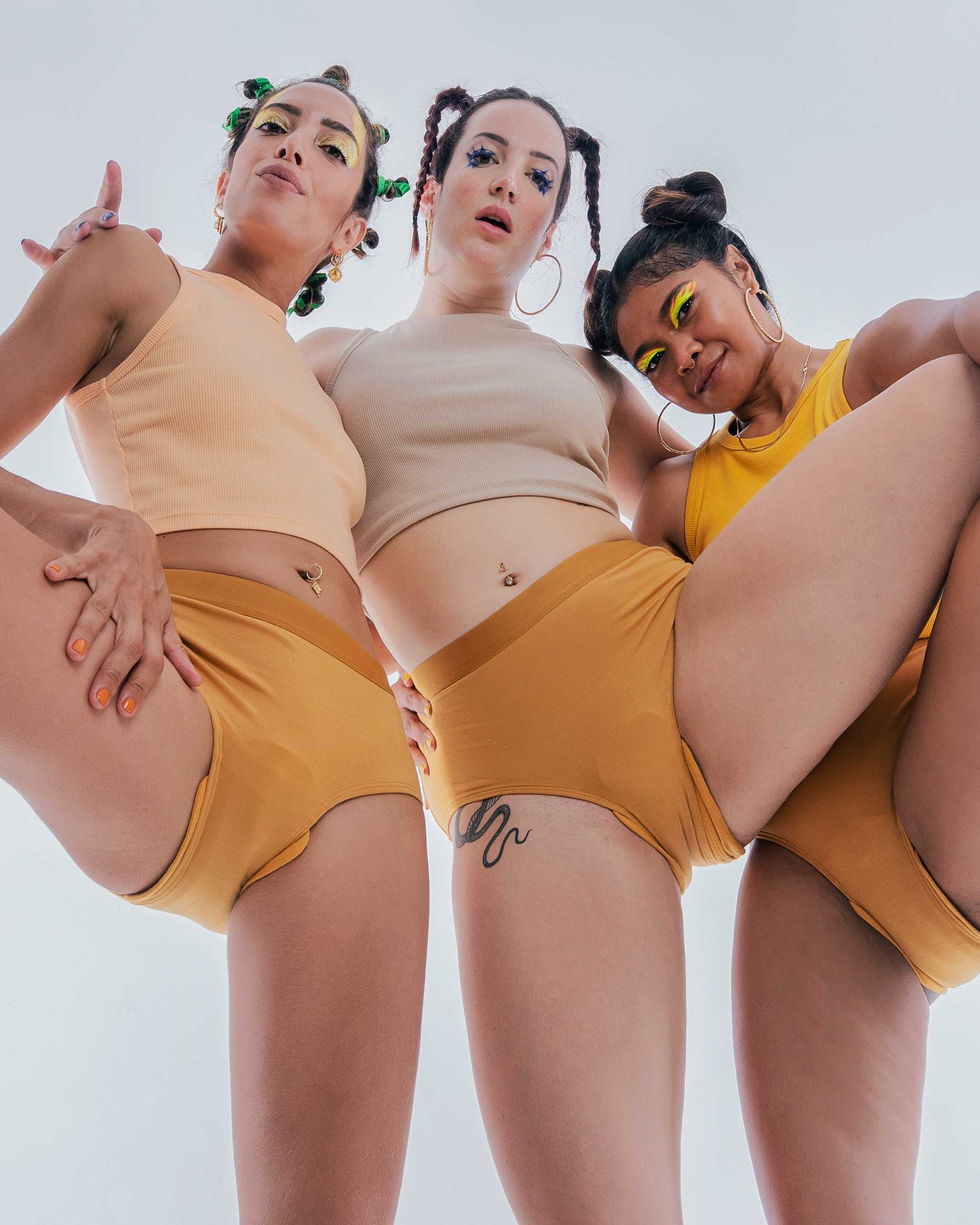


The sustainable period care aisle is now full of green leaves, soft fonts, and the word "natural." Some of it is real. A lot of it is decoration. And the hard part, as a shopper, is that the two look almost identical from the front of the pack.
I've spent years inside this industry, and I want to give you the questions I'd ask if I were standing where you are - the ones that cut through the design and get to whether a product is actually better or just better-marketed.
1. "Natural" and "organic" are not the same word
"Natural" means nothing. There's no standard behind it; anyone can print it. "Organic" can mean something - but only if it's certified, and only if you know which certification. Look for a real standard like IVN Best or GOTS, which cover the whole supply chain, not just a marketing claim about the final fabric. If a brand says "made with organic cotton" but won't name a certification, assume the claim is doing PR work, not telling you the truth.
2. Ask what temperature it washes at
This one's my favourite, because it's almost impossible to fake. A reusable product that can only be washed at 40°C is telling you something: there's plastic, synthetic elastic, or a chemical coating in it that can't survive higher heat. Blood and bacteria aren't reliably killed at 40°C. So a "sustainable" reusable that demands a cold wash often needs added biocides to compensate - which is the opposite of clean. A product you can wash at 60°C has nothing in it that the heat would ruin. The wash temperature is a confession.
3. Check for the chemicals they don't mention
PFAs - forever chemicals - have been found repeatedly in mainstream period products, including ones marketed as eco-friendly. Biocides like nanosilver are added to mask the bacterial problem that non-breathable fabric creates. The greenwashed version stays quiet about both. The honest version tells you plainly: no PFAs, no biocides, no plastic against your skin - and can stand behind it.
4. Look at whether the mission is in the product or the marketing
A leaf on the packaging is not a sustainability strategy. Ask what the brand actually does - in its materials, its supply chain, where its money goes. If the "purpose" lives only on the About page and nowhere in the product itself, you're looking at decoration.
Why I'm telling you how to see through us too
Here's the thing: these questions work on nookees as well. That's the point. I'd rather you interrogate my product than take my word for it - because nookees was built to pass exactly this test. Organic cotton PADS, IVN Best certified. Washable at 60°C. No plastic, no biocides, no PFAs. A Foundation that's in the unit economics, not bolted on.
THE SAVER is the complete set, and it's the proof. Run the four questions above on it, then run them on whatever else you're considering. That comparison is the most honest sales pitch I could give you.


